
You’re washing your car or airing up your tires, and suddenly you spot the treads look thinner on one edge or completely smooth in certain spots. The first thought that pops up is that it's just random tire wear, but that's not always the case. Tire wear can sometimes point to something far deeper.
Tire wear patterns reveal issues related to alignment, suspension, or even how you drive. And if you catch it early, you can fix the issue before it eats into your wallet (and your tires).
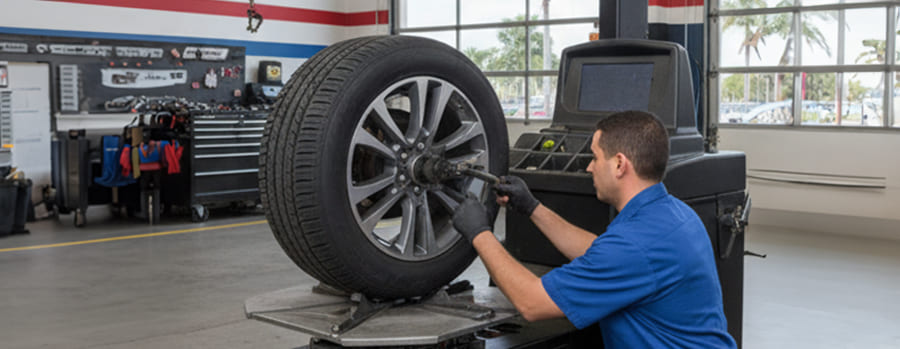
So, whether you’re commuting through Gurnee traffic, cruising along Route 41, or taking a family trip to Gurnee Mills, remember that it's your tires that take the beating. Uneven wear can affect handling, braking, fuel efficiency, and it's always better to nip those issues in the bud.
So, what causes it, how can you fix it, and when should you visit a professional. Let’s break down what causes uneven tire wear, the meaning behind each tire wear pattern, and what you can do to make your tires last longer.
Understanding Tire Wear Patterns
Your tire tread tells a story and knowing how to read it helps you spot problems before they turn costly. Let’s decode some of the most common tire wear patterns using a tire wear chart approach.
|
Tire Wear Pattern |
Appearance |
Likely Cause |
Solution |
|
Inner Tire Wear |
Inner edge of tire smooth, outer edge normal |
Wheel misalignment or worn suspension |
Alignment check and suspension inspection |
|
Outer Tire Wear |
Outer edge worn down more than inner |
Underinflation or aggressive cornering |
Inflate properly; inspect alignment |
|
Center Wear |
Center tread thinner than edges |
Overinflated tires |
Adjust tire pressure |
|
Cupping/Scalloping |
Bumpy or wavy pattern across tread |
Bad shocks or unbalanced tires |
Replace worn shocks, rebalance tires |
|
Feathering |
Tread ribs worn smoother on one side |
Incorrect toe alignment |
Alignment correction |
|
Patchy Wear |
Random smooth spots across tire |
Imbalanced tire or uneven braking |
Tire balancing or brake inspection |
Each pattern offers a clue about what’s happening underneath your vehicle.
Let’s Explore the Causes of Uneven Tire Wear
Luckily, knowing what causes it can help you catch problems early and keep your drive smooth and safe. Here are the most common culprits behind uneven tire wear and what you can do about them:
1. Misalignment
If your wheels aren’t perfectly aligned, your tires won’t meet the road evenly. One edge might carry more of the load, leading to inner tire wear or outer edge wear.
Alignment issues can develop gradually, especially if you hit potholes, drive over rough roads, or accidentally clip a curb (which, let’s be honest, happens to the best of us). Even a slight misalignment can change how your tires contact the pavement.
Tip: If you notice your car pulling to one side or your steering wheel feels off-center, it’s time to schedule a wheel alignment check. Catching it early can save your tires and your wallet.
2. Improper Tire Pressure
Your tire pressure plays a major role in how evenly your tires wear out.
Keeping your tires at the manufacturer’s recommended PSI (you’ll find it on the sticker inside your driver’s door) ensures balanced contact with the road.
Tip: Check your tire pressure at least once a month and always when the tires are cold. Proper inflation not only improves wear but also boosts fuel economy and ride comfort.
3. Worn Suspension Components
Your vehicle’s suspension system, including shocks, struts, and ball joints, keeps your tires planted firmly on the road. When these components wear out, your tires can bounce, lean, or lose consistent contact, leading to cupping or scalloped wear patterns.
Tip: If you feel a bouncy ride, hear knocking noises, or notice uneven tire wear, have your suspension inspected. Replacing worn parts early helps prevent further tire damage and restores a smoother drive.
4. Improper Tire Rotation
Every wheel position experiences different forces. The front tires handle steering and most of the braking, while the rear tires mainly provide stability. Without regular rotation, some tires wear down faster than others.
Tip: Rotate your tires every 5,000–7,500 miles or with every oil change. This simple step can add thousands of extra miles to your tire life and maintain consistent traction.
5. Aggressive Driving Habits
Your driving style can make or break your tires. Fast cornering, sudden stops, and hard acceleration put uneven stress on the tread, leading to patchy or premature wear.
Rapid acceleration can cause tire spin and heat buildup that thins the tread in spots. Sudden braking can create "flat spots,” where the tires lock and skid against the road, while sharp turns place extra force on the edges, wearing the shoulders faster.
Even with perfect alignment and tire pressure, these habits can shorten your tire’s life.
Drive smart to make those tires last, ease into acceleration and braking, take corners smoothly, and use cruise control on highways to maintain steady speeds. Gentle, consistent driving helps your tires wear evenly, keeping your ride safer, smoother, and more fuel-efficient.
Gentler driving not only helps your tires wear evenly but also improves fuel efficiency, ride comfort, and overall vehicle longevity.
The Risks of Ignoring Uneven Tire Wear
Uneven tread affects nearly every aspect of your car’s safety and performance. Here’s what can happen if you let it slide:
That’s why it’s important to schedule an inspection as soon as you notice any unusual tread wear.
Let CarWise Gurnee Help You Drive with Confidence
Uneven tire wear is one of the most common and most overlooked issues drivers face. The good news? It’s also one of the easiest to fix with the right care.
At CarWise Gurnee, our expert technicians have the tools, training, and experience to get your wheels, suspension, and alignment back in perfect condition. Whether it’s inner tire wear, vibration while driving, or just a regular tire rotation, we’ll make sure your car is road-ready in no time.
Don’t wait until your tires give up on you. Schedule a tire inspection and alignment service today at CarWise Gurnee, and let’s keep your drive smooth, safe, and efficient mile after mile.