29 October 2025
Gurnee drivers understand the relentless demands of life in the northern Illinois suburbs. Your vehicle is your lifeline, whether you’re commuting on I-94, navigating local roads in Gurnee and Waukegan, or simply running errands in Vernon Hills or Libertyville. The single most important, yet often overlooked, maintenance step you can take is a regular and informed engine oil service.
This guide is your deep dive into the specifics of engine lubrication in Northern Illinois climate. We'll explore everything from why the seasonal climate swings and suburban traffic make proper maintenance non-negotiable, understanding the differences between conventional and full synthetic oils, and the true meaning of those cryptic numbers on the oil bottle.
If you're searching for reliable oil change services in Gurnee or need expert advice on it, this resource will give you the knowledge you need to make smart decisions for your vehicle.
Why Oil and Maintenance are Critical for Gurnee’s Climate and Roads
In northern Illinois, your engine oil fights environmental factors that wear out your engine faster than in milder regions.
Viscosity Loss in Extreme Temperatures
From below-zero wind chills in Gurnee and Waukegan winters to 90°F+ humid summers across Lake County, Illinois weather puts your engine oil through constant stress.
In freezing conditions, oil thickens and struggles to flow during startup — especially after your vehicle has been parked overnight in places like Antioch or Grayslake. When temperatures swing the other way, summer heat along I-94 or around Libertyville can thin the oil, reducing its ability to protect metal components.
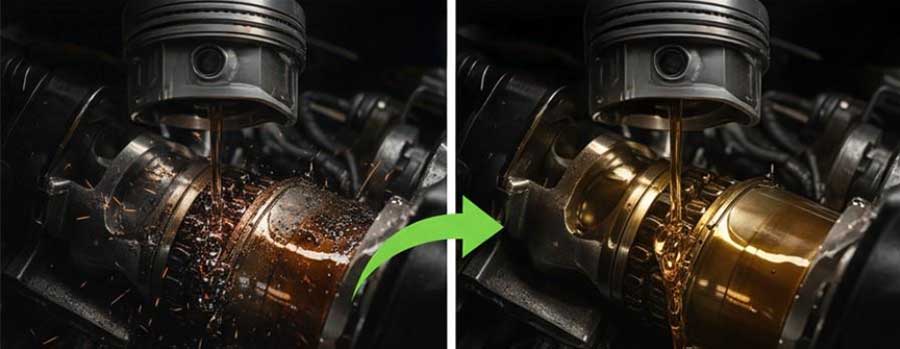
Once oil becomes too thin or degraded, it can’t maintain the vital protective film between fast-moving engine parts such as pistons, camshafts, and bearings. This results in more friction, heat, and long-term internal wear.
Oxidation and Sludge Buildup
During hot, stop-and-go Gurnee summers, oil oxidizes faster, especially in heavy traffic near Gurnee Mills or Route 41. As oil breaks down, it thickens and forms harmful sludge and varnish deposits that can clog oil passages, restrict lubrication, and even cause overheating or engine failure.
That’s why frequent oil changes using heat-resistant full synthetic oil are crucial. Full synthetics are specifically engineered to withstand temperature swings and resist sludge formation, making them ideal for Illinois’ unpredictable climate and year-round driving in and around Gurnee.
The Impact of Dust, Salt, and Stop-and-Go Traffic
Seasonal Debris
From road salt in winter to construction dust in summer and pollen in spring, fine particles can enter your engine, especially if your air filter isn’t in top condition. Once inside, they mix with oil and act like sandpaper, accelerating engine wear.
I-94 and Local Suburban Driving
Whether you're commuting on I-94 or navigating local roads in Gurnee, Grayslake, or Waukegan, your driving pattern likely includes:
- Frequent stops
- Idling in traffic
- Short trips
This type of driving causes heat buildup and can lead to fuel or condensation mixing with your oil (oil dilution), requiring more frequent oil changes.
Understanding Your Oil Change Options and Service Intervals
The days of the simple 3,000-mile blanket rule are long gone. Modern engines and oils require a calculated, informed approach.
Checking Your Owner’s Manual for the Correct Grade
This is a critical step. Ignoring your owner's manual for oil requirements can void your powertrain warranty and damage your engine.
- Viscosity Grade (e.g., 5W-30): This two-part number is a rating developed by the Society of Automotive Engineers (SAE). The first number, followed by the 'W' (for Winter), indicates the oil's thickness at cold temperatures. The second number is the thickness at normal operating temperature (100∘C). Always use the weight specified by the manufacturer, as modern engines have precise clearances designed for a specific oil viscosity.
Choosing the Right Oil: Conventional, High-Mileage, and Full Synthetic
Choosing the right base oil is the single greatest determinant of your engine's longevity.
| Oil Type |
Best Application |
Key Benefit for Modesto Drivers |
| Conventional Oil |
Very old, simple engines (pre-2000) that do not use specialized systems. |
Lowest initial cost. (Not recommended for most modern cars in extreme climates.) |
| High-Mileage Oil |
Vehicles over 75,000 miles. |
Contains conditioning agents that can swell worn seals, helping to reduce common oil leaks and consumption in older, high-mileage engines. |
| Full Synthetic |
Virtually all modern cars, especially those with turbochargers, direct injection, or high-performance specs. |
Superior resistance to thermal breakdown, excellent performance in extreme heat, minimal sludge formation, and longer change intervals. |
Relying on the Engine Oil Life System (OLS) And What to Do If You Don't Have One
Determining the exact right time for an oil change can be confusing, but whether your vehicle is new or has a few miles on it, the answer is simple: listen to your car or listen to the experts.
If Your Vehicle Has an OLS: Trust the Technology
The advent of the Engine Oil Life System (OLS) has revolutionized service intervals. Rather than relying on a fixed, generic mileage, the OLS uses complex algorithms to monitor your actual driving conditions:
- Engine Revolutions and Load: How hard the engine has worked.
- Temperature: How hot the engine has run.
- Time: The elapsed time since the last service.
The OLS constantly computes the remaining life of the oil and is far more accurate than a static sticker. Trust the OLS! When the dashboard indicator alerts you, schedule your service immediately. For drivers in the Modesto area, the severe nature of the driving environment often means the OLS will trigger service closer to 7,500 miles rather than the 10,000+ miles seen in milder climates.
If Your Vehicle Doesn't Have an OLS
If you drive an older vehicle without a built-in computer monitor, the old 3,000-mile sticker is probably stuck in your head. But with modern oils, the rules have changed!
The general rule of thumb for conventional or synthetic-blend oil is to aim for a change every 5,000 miles or 6 months, whichever comes first. For full synthetic, you can often push that to 7,500 miles or 6 months.
The Best Way? Consult the Experts. Don't guess your engine's health.
The factory-trained technicians at CarWise Gurnee are experts in all makes and models and understand the demands placed on local vehicles. They can assess your driving habits, recommend the exact right type of oil for your engine's age and mileage, and set you up with an accurate, hassle-free maintenance schedule.
The Critical Role of the Oil Filter in Lubricating with Clean Oil
The quality of your oil filter directly impacts the effectiveness of your fresh oil. As oil circulates, the filter traps contaminants, sludge, metal fines, and dust. A cheap or inefficient filter will either clog too quickly (starving the engine of oil) or allow too many contaminants to pass through, causing damage.
Always ensure your oil change services include a high-quality filter replacement that meets or exceeds the manufacturer's specifications.
Schedule Your Next Oil Change Today
Keep your car running strong in all four seasons. Whether you're in Waukegan, Grayslake, Antioch, Libertyville, or right here in Gurnee, trust CarWise Gurnee for fast, professional oil change service
Our technicians are here to help you drive with confidence, from routine engine oil change service to full synthetic oil replacements and filter changes when needed. It’s not about selling more services; it’s about keeping your engine running smoothly, your car reliable, and every journey safe.